Celebrating Diversity Through Coloring, Texture & Artistic Expression
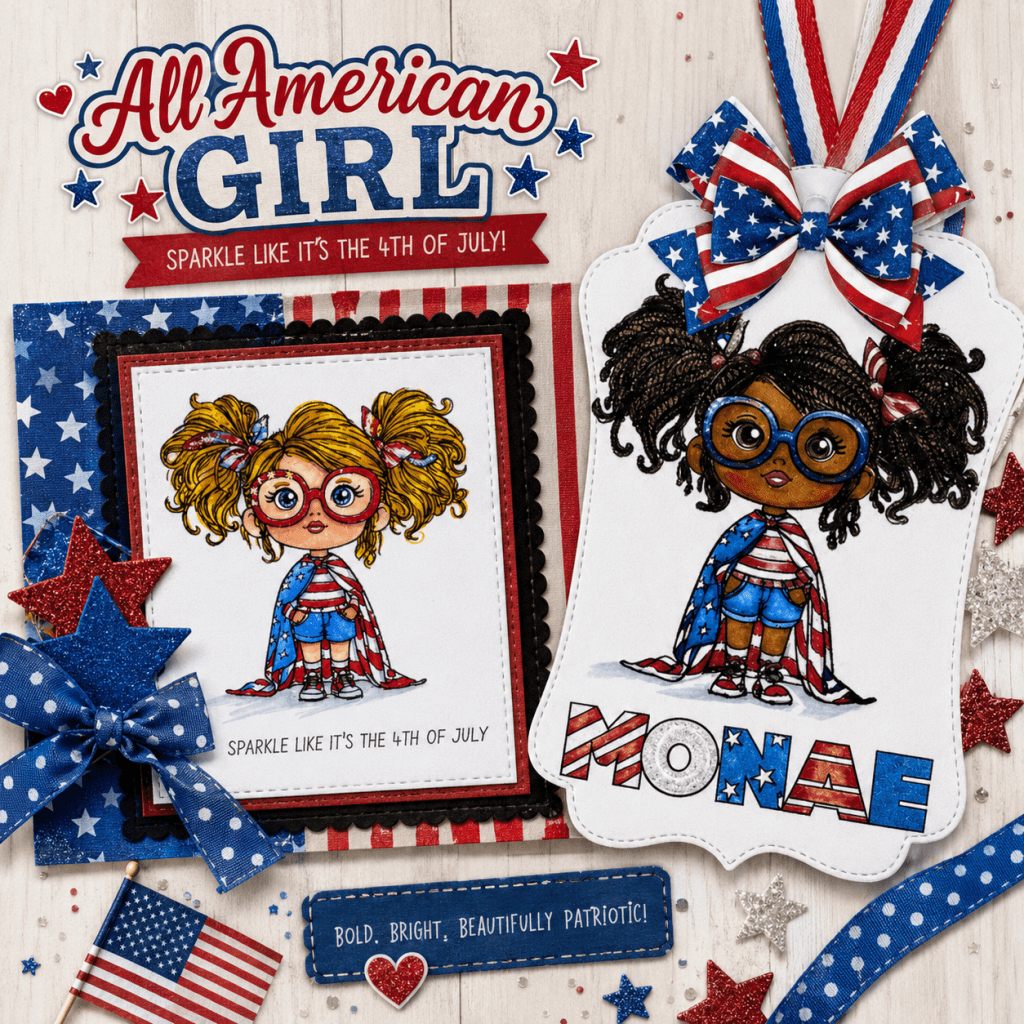
One of my favorite things about cardmaking and stamped images is how a single character can become completely unique through creative coloring choices. By changing hair texture, color placement, shading, and added pen details, you can personalize stamped images to better reflect different cultures, styles, personalities, and artistic visions.
Before I get started, if you LOVE this image and want to grab one for yourself, my affiliate link To Pajama Crafter Stamps is here. Appreciate your support!!
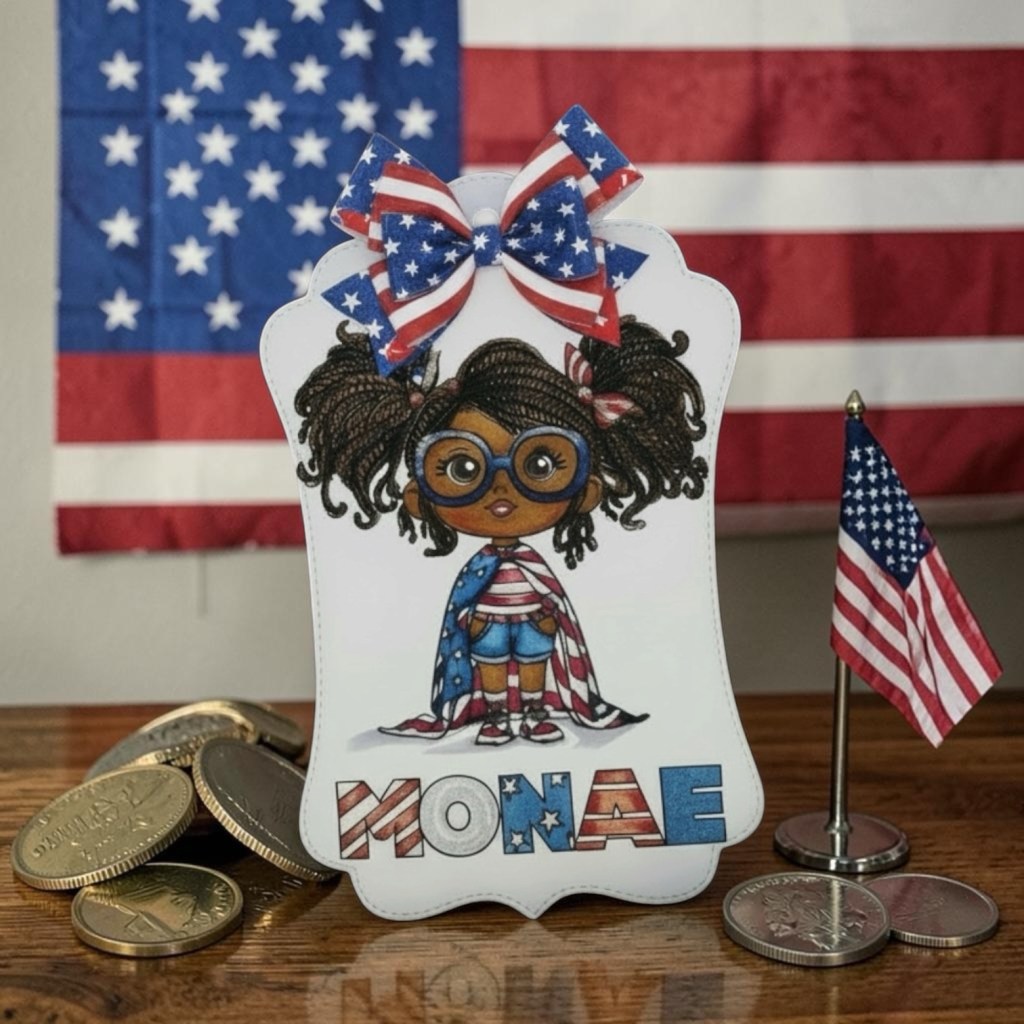
Recently, I shared this patriotic project featuring “Monae” with textured braids created using a combination of Copic Markers and a multiliner pen. That project sparked a wonderful question regarding customization and Angel Policies — specifically whether artists are allowed to alter stamped images through coloring techniques, added details, or texture enhancements.
The short answer?
In most cases: Absolutely yes.
Stamps Are Meant to Inspire Creativity
When you purchase a stamp, you are purchasing a tool for artistic expression. Coloring, shading, customizing hairstyles, changing textures, adding freckles, altering eye color, deepening skin tones, creating curls, adding braids, or modifying color placement are all forms of artistic interpretation.
This is no different than:
- Choosing seasonal color palettes
- Paper piecing clothing
- Adding glitter or embossing
- Extending backgrounds
- Creating scene cards
- Altering hair color or eye color
- Adding accessories or texture
As stampers and colorists, we bring these characters to life through our own creativity.
Using Color Placement to Create Hair Texture
Hair texture can dramatically change the personality and cultural representation of a stamped image. Small changes in marker strokes and pen detailing can create:
- Soft waves
- Loose curls
- Tight coils
- Natural texture
- Braids
- Twists
- Locs
- Straight styles
- Puff ponytails
- Protective styles
The stamped outline simply becomes the foundation.
Techniques for Creating Braids & Natural Texture
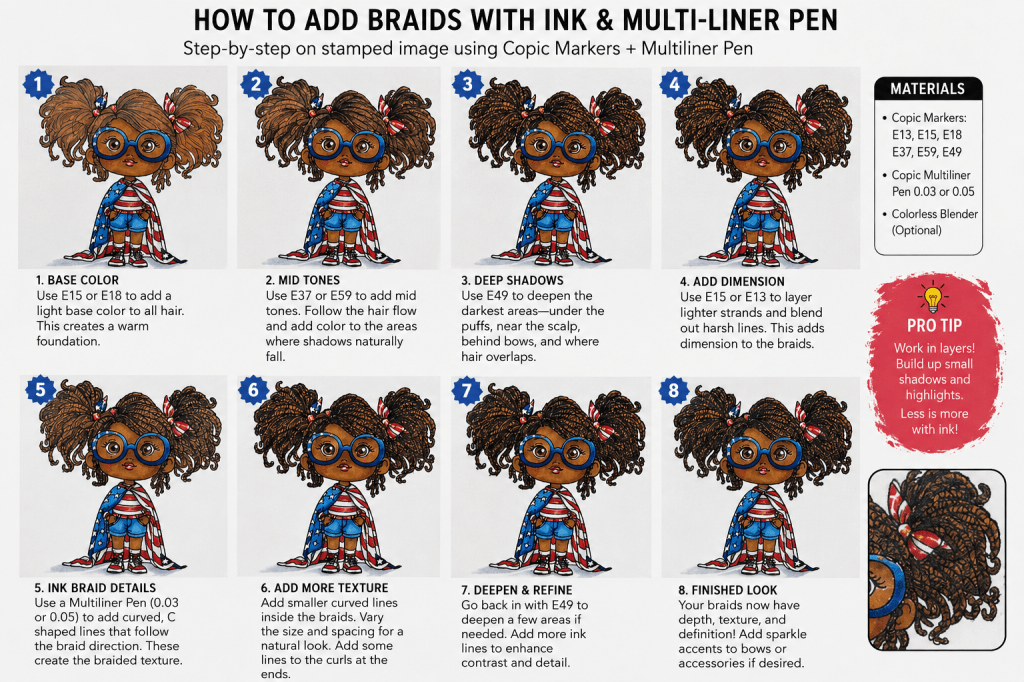
For my patriotic “Monae” project, I used layered Copic coloring and fine multiliner detailing to create the appearance of textured braids and coiled hair.
The Process Included:
1. Base Coloring
I started with warm brown Copic tones to establish the hair foundation.
2. Directional Coloring
Instead of coloring with smooth flat strokes, I followed the natural movement of the stamped hair using curved flicking motions.
3. Layering Shadows
Darker shades were concentrated:
- Near the scalp
- Under overlapping curls
- Behind accessories
- In deeper sections of the ponytails
4. Multiliner Pen Detailing
This is where the transformation really happens.
Using a very fine multiliner pen (0.03 or 0.05), I added:
- Small curved “C” strokes
- Looping braid shapes
- Tiny directional texture lines
- Additional strand definition
These details create the illusion of:
- Braided sections
- Coily texture
- Dimensional curls
- Natural hair movement
Creative Representation Matters
One of the beautiful things about stamping is the ability to create artwork that reflects a wide variety of people, cultures, and identities.
Coloring techniques allow artists to:
- Increase representation
- Create inclusive projects
- Personalize characters
- Reflect family and friends
- Explore different artistic styles
A single stamped image can become countless unique interpretations simply through:
- Skin tone combinations
- Hair color
- Texture techniques
- Fashion color placement
- Accessories
- Cultural styling inspiration
That creative flexibility is part of what makes paper crafting so meaningful.
Understanding Angel Policies
Angel Policies are designed to protect the intellectual property of the original artwork while still allowing crafters to enjoy creating with their stamps.
While every company has its own policy, most Angel Policies generally allow:
- Personal crafting
- Handmade card sales in limited quantities
- Coloring and customization
- Artistic interpretation
- Different color palettes
- Added shading and details
What is typically not allowed is:
- Digitally reproducing the original line art
- Scanning and redistributing images
- Mass production without permission
- Creating counterfeit copies
Adding creative coloring, texture, braids, curls, or stylistic details through hand-coloring does not usually violate an Angel Policy because you are enhancing the artwork — not reproducing or replacing the original illustration.
That said, always review the individual company’s Angel Policy if you plan to:
- Teach classes
- Sell products
- Create digital downloads
- Manufacture items
- Reproduce imagery commercially
Art Is Personal
One of the most rewarding parts of coloring stamped images is making them your own. Whether you prefer:
- Soft vintage palettes
- Bold rainbow colors
- Fantasy hair
- Realistic skin tones
- Cultural hairstyles
- Glitter and sparkle
- Graphic comic-inspired shading
…your creativity is what transforms a stamped image into art.
And honestly?
The crafting world becomes more beautiful when more people can see themselves reflected in the art we create.
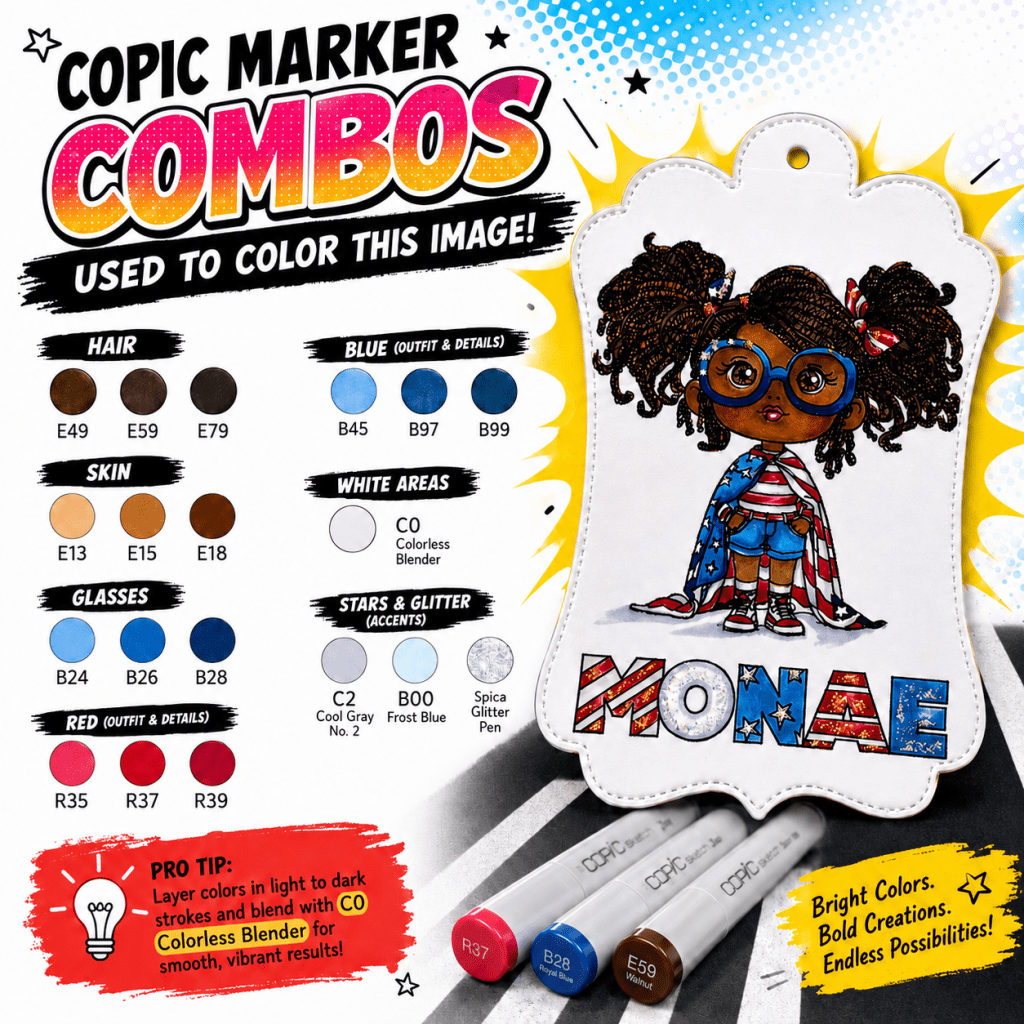
Featured Techniques Used on “Monae”
Hair
- E49
- E59
- E79
- Multiliner 0.03
Skin
- E13
- E15
- E18
Texture Technique
- Layered curved flick strokes
- Tiny looping pen details
- Deep shadow placement
- Highlight preservation
Final Thoughts
Never be afraid to experiment with color placement and texture techniques. Sometimes the smallest artistic choices — a deeper shadow, a braided line, a curl detail, or a different marker stroke — can completely transform a stamped image into something powerful, personal, and unique.
Creativity is the heart of stamping.
And every artist brings something different to the table.

